Inconsistent Outrage: When Race, Politics, and Language Collide
Two contrasting incidents reveal the selective nature of public outrage when racial slurs surface in different contexts, exposing how political allegiances and victim identity shape media coverage and societal response.
The Tale of Two Incidents
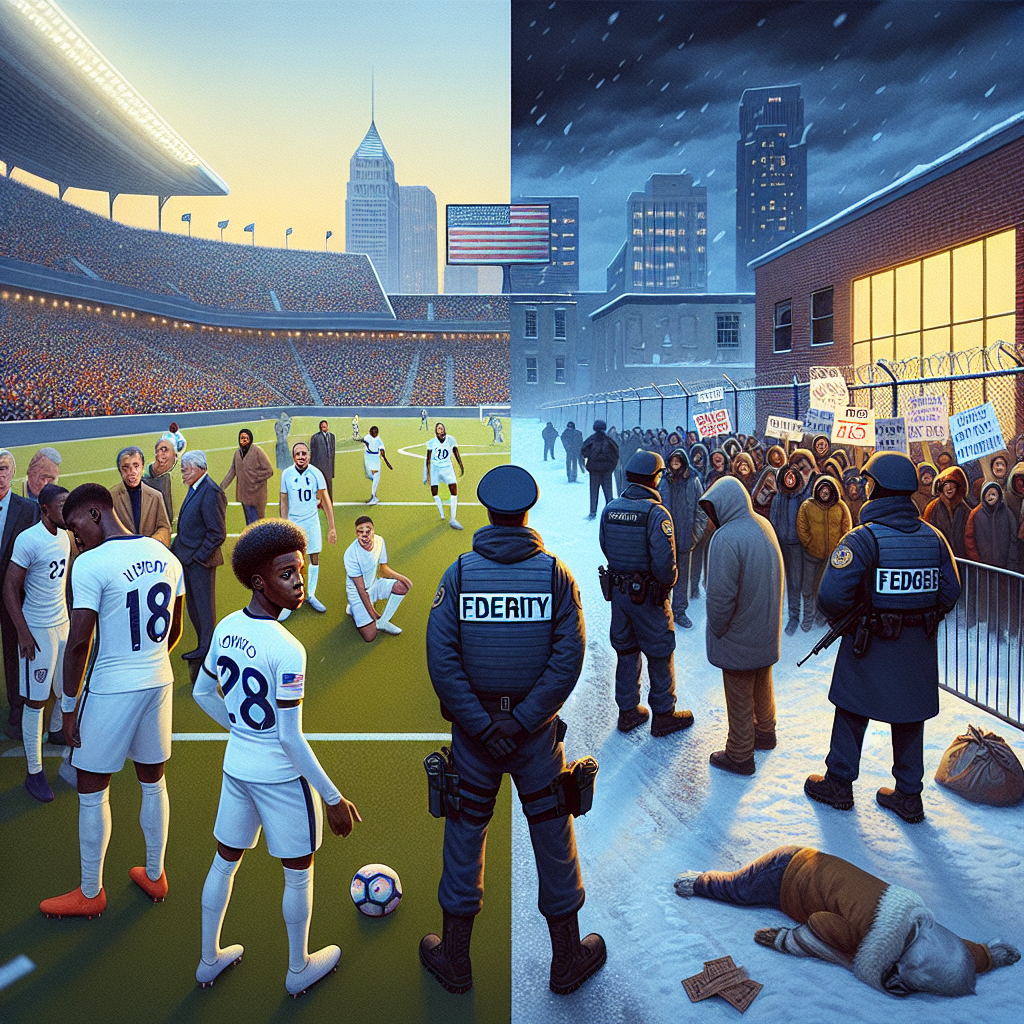
Recent events have crystallized a troubling pattern in how society responds to racial abuse. When Brazilian footballer Vinicius Junior faced racist chants at a Champions League match in Lisbon, the football world mobilized within hours. UEFA launched investigations, teammates spoke out, and headlines dominated sports outlets worldwide. Yet when protesters in Minneapolis hurled the same racial epithet at a Black ICE agent during February demonstrations, mainstream media coverage remained sparse.
The contrast reveals an uncomfortable truth about modern anti-racism activism. The same slur that triggers institutional responses and celebrity solidarity for a football star passes with minimal scrutiny when directed at a federal agent whose job conflicts with progressive politics.
This disparity extends beyond isolated incidents. In 2026 alone, multiple cases have highlighted how context, speaker identity, and target occupation influence public reaction to racist language. From BAFTA awards ceremonies to street protests, from linguistic misunderstandings to intentional slurs, the response patterns expose the selective application of anti-racist principles.
The phenomenon raises fundamental questions about consistency in combating racism. If the harm of racial slurs stems from their capacity to dehumanize and evoke centuries of violence, should the speaker's political alignment or the victim's profession alter our condemnation?
When Progressive Protesters Embrace Plantation Logic
The Minneapolis incident unfolded during anti-ICE demonstrations in February 2026. Video footage shows protesters repeatedly calling a Black federal agent a "house n-word" while he performed his duties. The term carries specific historical weight, referencing the alleged divide between enslaved people who worked in plantation houses versus fields, with house slaves perceived as more compliant with white authority.
Multiple clips circulated on social media platforms, sparking discussion in podcasts and online forums. The incident gained traction on Instagram, TikTok, Reddit's r/blackladies, and Facebook, with journalists like DL Hughley and Touré addressing the controversy in their shows. Yet mainstream outlets that typically provide wall-to-wall coverage of racial incidents remained notably silent.
The protesters' logic followed a familiar pattern. They viewed the Black agent as a racial traitor, someone who had betrayed his community by working for an immigration enforcement agency they opposed. In their framework, the racial slur transformed from a weapon of oppression into a tool of political correction, a way to punish perceived betrayal rather than celebrate Black dignity.
This reasoning echoes the plantation owner's mentality, not the abolitionist's. The idea that a Black person's worth and dignity depend on their political obedience represents one of the oldest forms of racism in American history. Even Malcolm X's analysis of "house Negro" versus "field Negro" dynamics focused on systemic oppression, not licensing white progressives to use racial slurs against Black people who make career choices conflicting with left-wing orthodoxy.
The incident occurred during Black History Month, a time supposedly dedicated to reflecting on Black struggles against racial injustice and centering Black dignity. Instead, the footage captured a Black man being dehumanized with the most loaded racial epithet in English, while those who ordinarily position themselves as racial justice guardians either looked away or quietly agreed he deserved it.
Football's Consistent Response to Racism
Vinicius Junior's experience provides a stark contrast in institutional response. The Real Madrid star has endured at least sixteen documented incidents of racist abuse while playing in Spain. ESPN compiled a timeline showing the systematic nature of the harassment: fans at Mallorca made monkey chants, Atletico Madrid supporters hung an effigy of him from a bridge, and Valencia fans received eight-month prison sentences for racist taunts in a landmark ruling.
Each incident triggered the full apparatus of European football governance. La Liga filed hate crime complaints, clubs faced fines, and UEFA implemented anti-racism protocols. When Vinicius accused Argentine winger Gianluca Prestianni of calling him "monkey" five times during a Champions League match against Benfica, the response was immediate and comprehensive.
The match halted for ten minutes under FIFA's anti-racism protocol. Teammate Kylian Mbappe confirmed hearing the slur, UEFA announced an investigation, and the Brazilian Football Confederation issued solidarity statements. Trent Alexander-Arnold called it "a disgrace to football," and headlines dominated major sports outlets within hours.
This response pattern represents anti-racism functioning as intended. Perpetrators face identification, prosecution, banning, and public shame. The system works imperfectly and slowly, but it works. Vinicius has shown courage in refusing silence about racial abuse, describing publicly how it affects him emotionally and psychologically.
The Brazilian's experience demonstrates what consistent anti-racist principles look like in practice. His protection remains non-negotiable regardless of political considerations, and the football community has largely maintained this standard across multiple incidents.
Language Barriers and Cultural Misunderstandings
Cross-cultural linguistic misunderstandings add another layer to these complex dynamics. The Mandarin Chinese word "那个" (pinyin: nàgè, colloquially spoken as nèige or nèi ge) means "that" or "that one." In everyday conversation, it functions as a filler word, similar to English "um" or "you know," helping speakers gather thoughts or transition ideas.
When repeated quickly in casual speech ("nèi ge, nèi ge, nèi ge"), the sound closely resembles the N-word to English-trained ears, particularly American ones. This phonetic similarity has created multiple public incidents despite the complete lack of racist intent.
The most documented case occurred in 2020 at the University of Southern California's Marshall School of Business. Professor Greg Patton taught a communications class on filler words across cultures, illustrating the Chinese example by saying, "In China, the common word is 'that, that, that' so it might be nèi ge, nèi ge, nèi ge." Several Black MBA students filed formal complaints, describing the repetition as "vile" and harmful to their psychological safety.
The dean initially removed Patton from the course, though a subsequent university investigation found no ill intent and affirmed the pedagogical legitimacy of the example. Patton later stepped back from the MBA program voluntarily amid the fallout. Similar stories surface regularly in China, where subway altercations and street misunderstandings occur when the innocent utterance meets explosive responses from English speakers.
These incidents expose the collision between emotional triggers and linguistic reality. The emotional dimension proves powerful and legitimate. For many Black Americans, the N-word carries trauma from centuries of dehumanization, making phonetic similarities genuinely distressing even when context proves innocent.
Yet logically, the situation reveals a classic mismatch between auditory resemblance and moral equivalence. Languages evolve independently, and shared sounds prove nothing about shared intent or ethics. Demanding that native speakers suppress core grammatical elements because they echo slurs in other languages stretches sensitivity into auditory imperialism.
The BAFTA Controversy and Involuntary Speech
The 2026 BAFTA Film Awards provided another revealing case study in inconsistent responses to racial language. During the February 22 ceremony, John Davidson, a British Tourette's syndrome advocate whose life inspired a nominated film, experienced an involuntary tic that produced the N-word while Black actors Michael B. Jordan and Delroy Lindo presented on stage.
The incident triggered immediate and sustained coverage across major media outlets. Television producers faced criticism for inadequate delay systems, celebrities issued statements about trauma and sensitivity, and institutional apologies followed. The response machinery engaged fully despite the complete absence of intent or control on Davidson's part.
Davidson has spent years advocating for Tourette's awareness, working to destigmatize a neurological condition that affects roughly 1 in 100 children. His advocacy emphasizes that tics are involuntary and do not reflect the person's thoughts, beliefs, or intentions. The irony of facing public condemnation for an uncontrollable neurological symptom was not lost on disability rights advocates.
The incident occurred in a prestige setting with international broadcast reach, amplifying shock for viewers. Historical trauma from the word's use as a weapon of dehumanization created immediate emotional triggers, regardless of medical context. Many viewers experienced legitimate distress, and the luxury entertainment setting felt inappropriate for such language, even when medically involuntary.
Media coverage treated the incident as a full scandal, with entertainment outlets running sustained analysis and calls for better editing protocols. The response contrasted sharply with the Minneapolis protest coverage, where intentional use of the same slur received minimal mainstream attention.
The Sports Context and Anti-Fragility
Sports environments have long grappled with the line between competitive psychological warfare and unacceptable abuse. Cricket's "sledging" tradition involves deliberate psychological attacks designed to destabilize opponents, often including personal comments whispered to avoid witness testimony. Football similarly tolerates extensive verbal exchanges between players as part of competitive dynamics.
The concept of anti-fragility suggests taking advantage of small downside risk for potential large upside gains. Players who can maintain composure under verbal assault while delivering exceptional performance on the field demonstrate this principle effectively. A stunning hat-trick or fantastic goal provides the most devastating response to opposition taunts.
Professional athletes understand that provocation comes with the territory. The question becomes where competitive trash talk crosses into unacceptable territory. Racial abuse clearly violates acceptable boundaries, but the enforcement mechanisms vary dramatically based on context and participants.
When fans direct racial abuse at players, the institutional response typically proves robust. Lifetime bans, criminal charges, and public condemnation follow documented cases. When abuse comes from fellow players, the response depends heavily on the players' identities and the specific language used.
The selective enforcement creates perverse incentives. Players learn that certain types of abuse will trigger institutional protection while others receive minimal response. This inconsistency undermines the goal of creating environments where talent and character determine success rather than political considerations.
Progressive Selective Standards
Progressive white people often demonstrate selective outrage patterns when Black people face racial abuse. A Black conservative or law enforcement officer receiving racist treatment frequently generates minimal progressive response compared to abuse directed at Black people who align with progressive politics.
The message proves clear and troubling. Black people's protection from racism depends on their political utility and ideological alignment. Step out of line from progressive orthodoxy, and the same people who would march for Vinicius Junior will ignore or even tacitly approve racial abuse directed at Black conservatives.
This selectivity reveals that anti-racism has become a political tool rather than a moral principle for many progressive activists. The framework includes exceptions, asterisks, and small print about who qualifies for protection. Such conditional anti-racism is not anti-racism at all but tribalism wearing a moral costume.
Black Americans who do not subscribe to progressive politics receive a clear message from this pattern. Their Blackness is conditional, their dignity negotiable based on career choices and political positions. Black conservatives, law enforcement officers, military personnel, and others with heterodox views cannot count on progressive protection from racist abuse.
The pattern extends to international contexts where American progressive frameworks get exported globally. Local contexts and cultural differences receive minimal consideration when American racial politics get imposed on foreign situations. The assumption that American racial dynamics and terminology should govern global discourse represents a form of cultural imperialism.
Media Coverage Patterns and Institutional Responses
The stark difference in media coverage between incidents reveals the machinery behind selective outrage. When Vinicius faces abuse, the response system engages automatically. Sports journalists write analysis pieces, celebrities post solidarity statements, and institutional bodies launch investigations. The news cycle sustains attention for days or weeks.
When the Black ICE agent faced abuse in Minneapolis, the same machinery remained dormant. No breathless CNN panels analyzed the incident, no tearful MSNBC monologues explored the implications, and no hashtags trended on progressive influencer accounts. The algorithms did not amplify the story, op-ed pages did not fill with condemnation, and activist accounts that typically post black squares and solidarity fists went quiet.
This pattern suggests that outrage generation requires institutional coordination rather than spontaneous public response. The same incident that would trigger massive coverage in one context passes unnoticed in another, depending on whether media institutions decide to activate their response machinery.
The coordination appears ideologically driven rather than principle-based. Media outlets that position themselves as racial justice advocates consistently apply different standards based on the victim's political alignment and the perpetrator's identity. The result undermines public trust in media institutions and reveals the partisan nature of much contemporary anti-racism activism.
Social media platforms similarly demonstrate selective enforcement patterns. Content policies that ban racist language get applied inconsistently based on political context. Slurs directed at Black conservatives often remain active while identical language targeting progressive Black voices faces immediate removal.
Global Perspectives on Racial Language
International travel provides perspective on how racial dynamics vary across cultures and contexts. In Nigeria, being Jamaican might not be viewed favorably despite shared African heritage, while West African features can prove advantageous in certain situations. These nuances highlight how racial categorization and prejudice operate differently across global contexts.
In Belgrade, Serbia, being identified as "the black guy over there" raises questions about appropriate response. Should hearing the Serbian word "crni" for black trigger offense and demands for punishment, or should it be accepted as a straightforward descriptive identifier? The context, intent, and cultural norms all factor into reasonable interpretation.
Different societies have varying relationships with racial language and identity. What constitutes offensive terminology in one culture might be neutral or even positive in another. American racial sensitivities do not automatically translate to global contexts, and imposing American standards worldwide can create unnecessary conflict.
The Benedict Cumberbatch incident illustrates these cross-cultural challenges. In 2015, the British actor used the term "coloured" to refer to Black actors during a US television interview, subsequently issuing a public apology for causing offense. Yet the NAACP, the National Association for the Advancement of Colored People, continues using similar terminology in their organizational name and mission.
These contradictions highlight the subjective and contextual nature of language offense. The same terms can be acceptable or unacceptable depending on speaker identity, geographical location, historical period, and political alignment. The inconsistency creates confusion and suggests that language policing often serves political rather than moral purposes.
The Path Forward
Moving beyond selective outrage requires acknowledging that racism remains wrong regardless of direction, target, or speaker. The N-word carries poison regardless of the politics of the person who speaks it or receives it. Any anti-racism framework that includes exceptions based on political alignment or occupational choice abandons moral consistency for tribal advantage.
Vinicius Junior deserves every bit of support he receives when facing racial abuse. The unnamed Black ICE agent deserves the same protection and solidarity. These truths are not in conflict unless anti-racism becomes subordinated to political considerations.
The silence around certain incidents proves revealing. When racism serves political narratives, institutions mobilize quickly and comprehensively. When racism complicates those narratives or targets people with unpopular occupations, the same institutions look away. This pattern undermines the credibility of anti-racism as a moral movement rather than a political tool.
Language barriers and cultural misunderstandings require good-faith navigation from all parties. Neither denying genuine pain nor surrendering linguistic reality serves productive dialogue. Understanding that phonetic similarities across languages create legitimate confusion while maintaining that intent and context matter represents a mature approach to cross-cultural communication.
Sports provide useful models for consistent anti-racism application. The football world's response to Vinicius Junior's abuse shows institutions functioning properly when principles remain paramount. Extending that consistency to all contexts regardless of political considerations would strengthen rather than weaken anti-racism efforts.
The demand for addressing racism remains high while the supply of actual racism has decreased in many contexts. This dynamic creates pressure to inflate minor incidents into major offenses while overlooking significant abuse that occurs in politically inconvenient contexts. Proportional responses based on clear principles rather than political utility would better serve the goal of reducing actual racism.
Until society can condemn racist language consistently regardless of political alignment, anti-racism will remain a brand rather than a principle. Brands respond to market pressures and tribal loyalties. Principles transcend politics and apply universally. The choice between these approaches will determine whether anti-racism achieves its stated goals or becomes another tool of political division.
This post contains affiliate links. If you purchase through these links, I may earn a commission at no extra cost to you.